
A Guide to Traditional Uruguayan Pastries
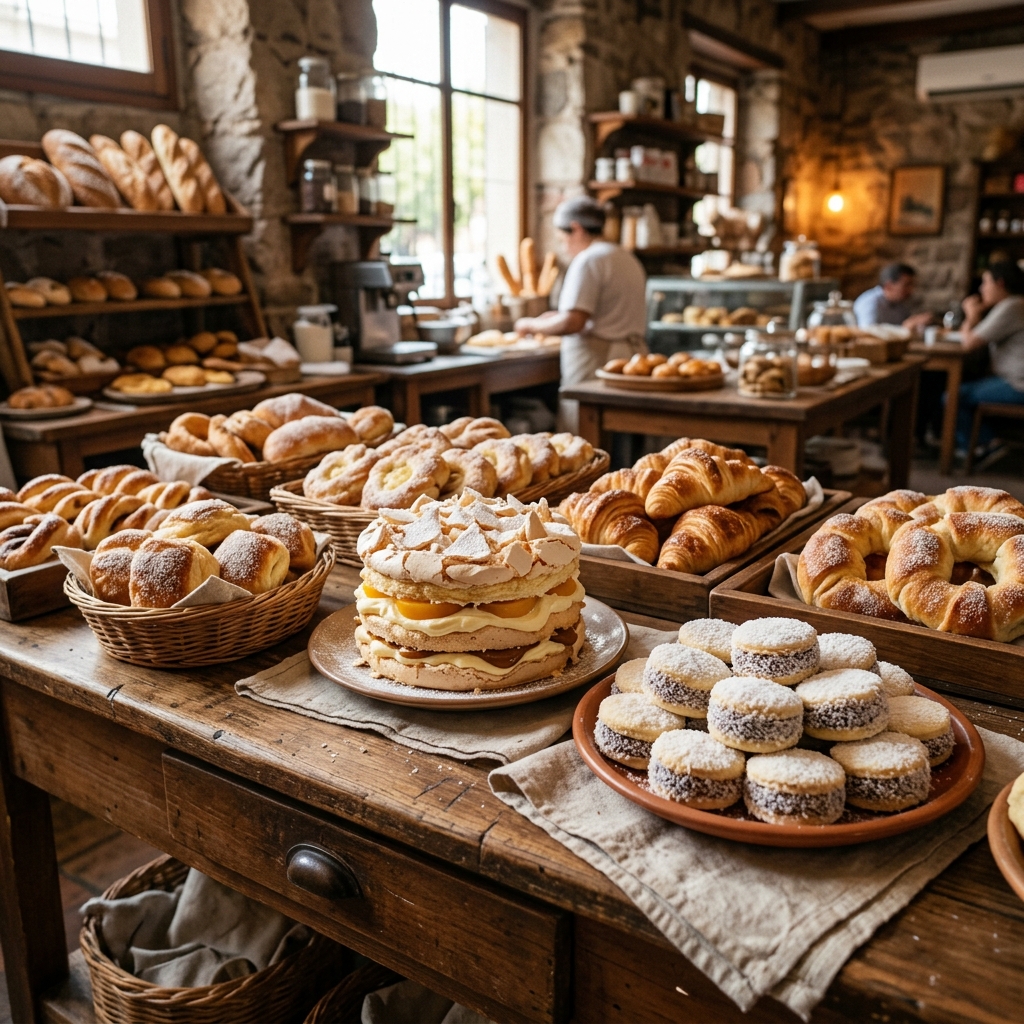
A Guide to Traditional Uruguayan Pastries: The Sweet Soul of the Panadería
Walk into any Uruguayan neighborhood at 8:00 AM or 5:00 PM, and you will be pulled by an invisible string toward the local panadería (bakery). The scent of caramelizing sugar, yeasted dough, and melted butter is the olfactory backdrop of life in the Southern Cone. For Uruguayans, a meal is never truly over without something sweet, and a "merienda" (afternoon snack) is incomplete without a selection of pastries that reflect a century of European migration and local innovation.
The Engine of Sweetness: Dulce de Leche
To understand Uruguayan pastries, one must first surrender to Dulce de Leche. While other cultures use custard or jam as their primary filling, Uruguay uses this thick, mahogany-colored milk jam for almost everything. It is made by slowly simmering milk and sugar for hours until common chemistry transforms into something divine: the Maillard reaction. This process creates a depth of flavor that is part caramel, part toffee, and entirely addictive. In Uruguay, we don't just use it as a garnish; we use it as a structural element in our baking.
Postre Chajá: The Pride of Paysandú
If there is a king of Uruguayan cakes, it is the Postre Chajá. Created in 1927 by Orlando Castellano in the northern city of Paysandú, this dessert was named after the Chajá (Southern Screamer), a bird known for its voluminous, fluffy plumage. The comparison is apt: the cake is a cloud of textures.
An authentic Chajá consists of several distinct layers:
- Bizcochuelo: A light-as-air sponge cake.
- Meringue: Broken pieces of dry, crunchy meringue that provide a satisfying "snap" in every bite.
- Whipped Cream: Copious amounts of fresh, unsweetened cream to balance the intensity of the sugar.
- Fruits: Thin slices of juicy peaches or strawberries.
- The Secret Bond: Thick veins of Dulce de Leche that hold the airy structure together.
The entire cake is often coated in more crushed meringue, making it look like a snowy mountain. At La Gran Uruguaya, we follow the original Castellano family philosophy: never compromise on the freshness of the cream or the crunch of the meringue.
Alfajores: The Cookie That Conquered a Continent
While you can find Alfajores across Latin America, the Uruguayan version has a specific character. An alfajor is essentially a sandwich made of two cookies with a filling—usually Dulce de Leche—and a coating.
The Major Varieties:
- Alfajores de Maicena: These are the aristocrats of the alfajor world. The dough is made primarily from cornstarch (maicena), resulting in a cookie so fragile it practically dissolves on contact with your tongue. The edges are rolled in shredded coconut, providing a tropical hint to the creamy center.
- Alfajores de Nieve (Snow Alfajores): These are coated in a hard, white royal icing or meringue shell. The "snap" of the icing followed by the softness of the cookie is a sensory delight.
- Chocolate-Coated Alfajores: These are the ultimate indulgence. Whether it's dark chocolate to cut through the sweetness or milk chocolate for a total sugar rush, these are the most popular "on-the-go" treats in Uruguay.
Bizcochos: The Daily Bread of the Soul
While "pastries" often implies a fancy treat, Bizcochos are a fundamental part of the daily diet. They are small, bite-sized pastries that families buy by the kilo.
The hierarchy of bizcochos is complex:
- Bizcochos de Grasa: Savory and salty, made with high-quality fat. Examples include the Cuernitos (little horns) and Galletas. These are the traditional accompaniment to the bitter Mate infusion.
- Bizcochos de Manteca: Sweet and buttery, often laminated like a croissant but with a denser, more satisfying crumb.
- Margaritas: Flower-shaped puff pastries with a "heart" of thick pastry cream or Dulce de Leche.
- Vigilantes: Named after the "vigilant" police officers who used to buy them, these are long, sugared batons often topped with a stripe of tart membrillo (quince paste).
The Ritual of the Panadería
In Uruguay, visiting the bakery is the social event of the afternoon. You take a numbered ticket, wait your turn, and then point to exactly which bizcochos you want in your brown paper bag. It’s a moment of connection where the baker knows your name and your favorite type of haldrado (puff pastry).
At La Gran Uruguaya, we bring this same spirit to Queens. Our bakers arrive in the early hours to ensure that every vigilante is crispy, every alfajor is tender, and every slice of Chajá takes you back to a sunny afternoon in a Montevideo café. We invite you to explore this world of sweetness—one bite at a time.