
The Silent Language of the Repulgue: Secrets of Uruguayan Empanadas
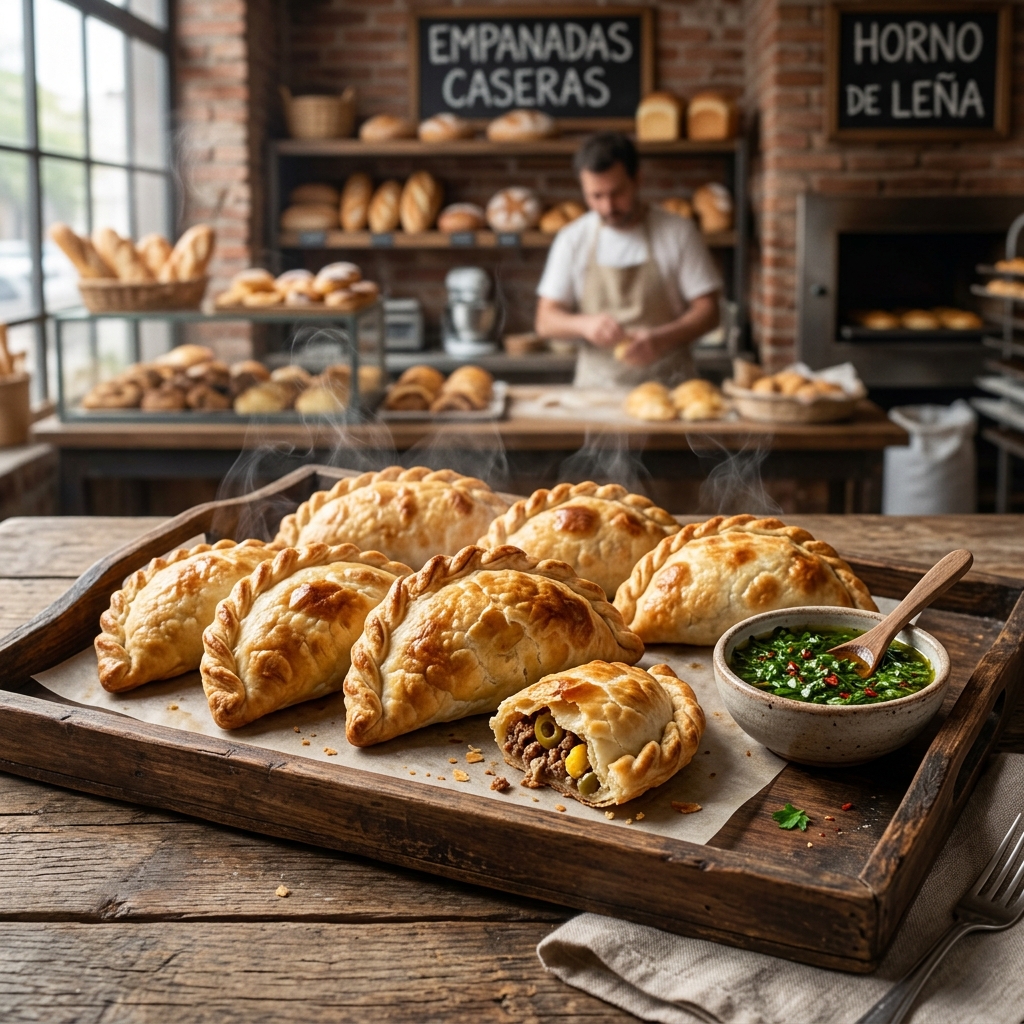
The Silent Language of the Repulgue: Secrets of Uruguayan Empanadas
The empanada is perhaps the most versatile food in the world. You can find versions of this filled pastry from Cornwall to Calcutta. But in Uruguay, the empanada is more than a snack—it’s a precision-engineered piece of heritage. While our neighbors have their own versions, the Uruguayan empanada is defined by its ultra-flaky, "hojaldrada" (puff-style) pastry and a filling philosophy that balances savory depth with unexpected bursts of sweetness.
The Architecture of the Crust: Hojaldre vs. Masa
In the world of empanadas, there are two main schools of thought regarding the dough:
- Masa Criolla: A more "bread-like" dough, often used for empanadas that are meant to be fried. It is sturdy and satisfying.
- Masa de Hojaldre: This is where Uruguayans truly shine. This "leafy" or flaky pastry is created by layering dough with high-quality fat (traditionally grasa de pella) and folding it repeatedly. When baked, the layers expand, creating a light, crispy exterior that shatters upon the first bite.
At La Gran Uruguaya, we specialize in the baked hojaldre style. This method allows the pastry to remain light and grease-free, letting the quality of the ingredients take center stage.
The Secret Code: The 'Repulgue'
To the untrained eye, the different folds on the edge of an empanada might look like mere decoration. But to a Uruguayan, the repulgue is a critical piece of information. Because all empanadas look identical once they are closed, the "closing" pattern serves as a label.
The universal language of the repulgue:
- The Twist (Simba): A braided edge usually indicates the classic Carne (beef) filling.
- The Pinched Edge: Often used for Pollo (chicken) to distinguish it from beef.
- The Fork Mark: A simple press of a fork often labels Jamón y Queso (ham and cheese).
- The Square Fold: Used for specialty fillings like Caprese or Corn (humita).
Next time you order a mixed dozen, pay attention to the edges—they are telling you exactly what’s inside.
The Filling: 'Cortada a Cuchillo'
The heart of a great empanada is the meat. While many industrial versions use ground beef, the gold standard in Uruguay is Carne Cortada a Cuchillo (hand-diced beef). By cutting the beef into tiny, uniform cubes rather than grinding it, the meat retains its juices during the baking process, resulting in a much more flavorful and textured filling.
But the meat is only the beginning. An authentic Uruguayan beef empanada follows a specific aromatic profile:
- Onion and Bell Pepper: Sautéed until soft and sweet.
- Spices: A blend of cumin, sweet paprika (pimentón), and a touch of red pepper flakes (ají molido).
- The "Surprises": Sliced hard-boiled eggs for creaminess, green olives for saltiness, and occasionally a single raisin for a hit of sweetness—a legacy of the Moorish influence brought by Spanish settlers.
Why the Balance Matters
What sets our empanadas apart is the "balance of the elements." We believe an empanada should never be dry. When you bite into it, there should be a slight "jus" from the meat and onions. The brininess of the olive should contrast with the buttery pastry, and the heat from the spices should be a warm hug rather than a sharp bite.
From the Streets to the Table
In Uruguay, empanadas are the ultimate "social food." They are bought by the dozens for birthday parties, soccer matches, or a casual Sunday lunch. They are designed to be eaten with one hand, leaving the other free for a glass of wine or a firm handshake.
At La Gran Uruguaya, every empanada we serve is hand-folded by our artisans who have spent years mastering the "repulgue." We don't use machines; we use memories. When you take a box of our empanadas home, you are carrying a piece of Uruguayan hospitality—perfectly wrapped and ready to enjoy.