
Día de Ñoquis: The Story Behind Uruguay's Luckiest Tradition
Día de Ñoquis: The Story Behind Uruguay's Luckiest Tradition
If you find yourself in Montevideo, Jackson Heights, or any Uruguayan enclave on the 29th of the month, you will witness a peculiar phenomenon. Every restaurant, from the humblest diner to the most upscale bistro, will have a special "Ñoquis" menu. This isn't just a culinary preference; it is the Día de Ñoquis (Gnocchi Day), one of the most beloved and strictly observed traditions in the Southern Cone.
The Pragmatic Origins: The "End of the Month" Meal
The tradition has two distinct roots—one deeply practical and the other wonderfully mystical.
In the late 19th and early 20th centuries, Uruguay saw a massive influx of Italian immigrants. These families brought their recipes and their resilience. By the 29th of the month, most workers—who were paid monthly—found their pockets nearly empty. They needed a meal that was filling, nutritious, and made from the simplest, cheapest ingredients in the pantry.
The answer was Ñoquis. Made primarily from potatoes and flour, they were the perfect solution to the "fin de mes" (end of the month) budget gap. It became a day where the community stood in solidarity, eating the same humble meal as they waited for the next paycheck.
The Legend of Saint Pantaleon
For those who prefer a touch of magic with their pasta, there is the legend of Saint Pantaleon. According to the story, a young pilgrim once traveled through a poor Italian village on the 29th of the month. He knocked on the door of a humble family, asking for a morsel of food. Despite having very little, the family invited him in and shared their small plate of gnocchi.
When the pilgrim left, the family discovered several gold coins under their plates. The pilgrim was revealed to be Saint Pantaleon, and the day was cemented as a time of communal sharing and unexpected bounty.
The Ritual of the Coin
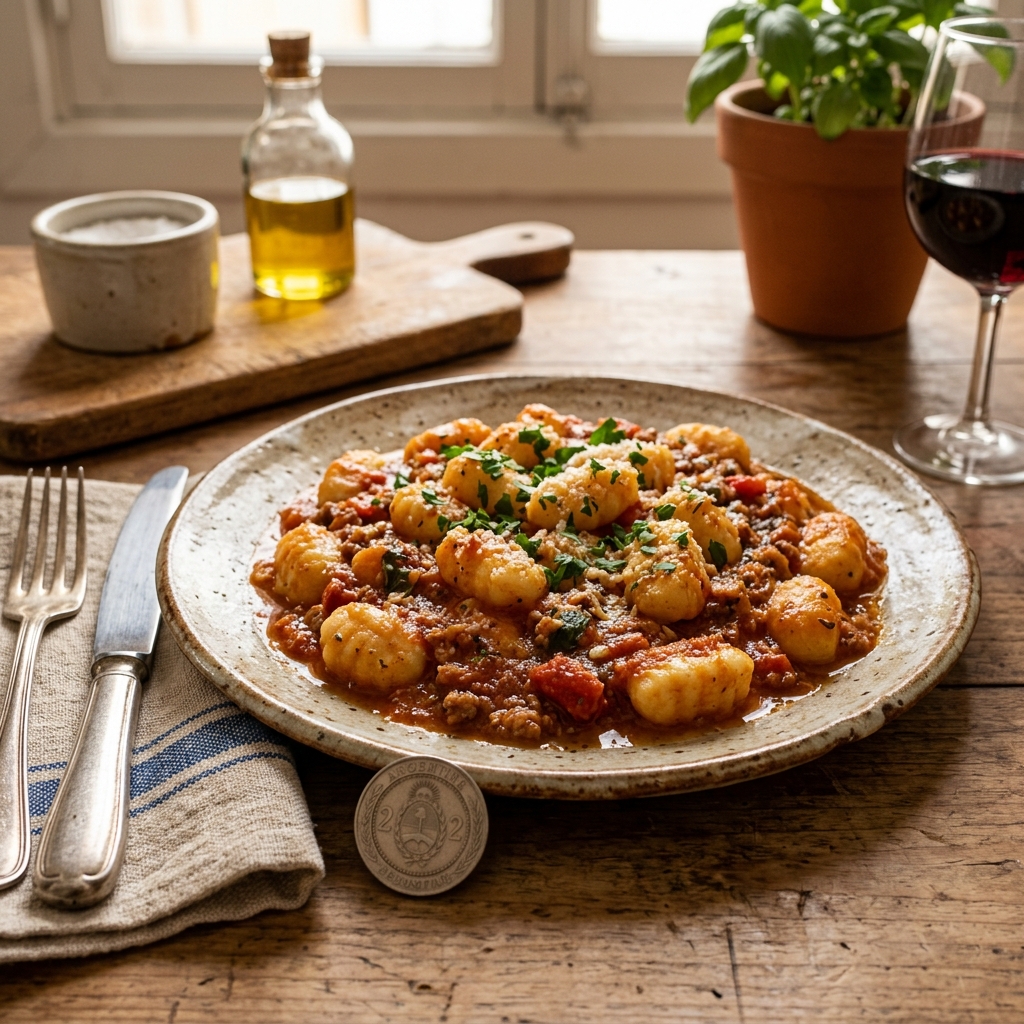
To this day, the tradition is not complete without the ritual. When you sit down to eat your ñoquis on the 29th, you must place a coin or a high-denomination bill under your plate.
The rules of the ritual:
- The Placement: The money must be under the plate while you eat.
- The Intention: As you take your first bite, you make a silent wish for prosperity and abundance in the coming month.
- The Aftermath: Some say you should keep the coin until the next 29th, while others believe you should donate it to someone in need to keep the "cycle of luck" moving.
The Craft of the Perfect Ñoqui
While the tradition is about luck, the meal itself is about craft. A great ñoqui should be light, airy, and "melt in your mouth"—never gummy or chewy.
At La Gran Uruguaya, we follow the old-school ratio: 1 kilo of boiled, dry potatoes to approximately 300 grams of flour. The secret is to handle the dough as little as possible to prevent the gluten from developing. We roll them over a wooden riga-gnocchi board to create those characteristic ridges that act as "flavor traps" for the sauce.
Speaking of sauce, the 29th usually calls for something hearty. The most traditional choice is Estofado (a slow-cooked beef stew) or a rich Tuco sauce. However, many of our guests prefer the Salsa Rossini—a creamy tomato sauce with mushrooms that perfectly complements the delicate potato pillows.
A Global Tradition
Even in New York City, the Día de Ñoquis remains a vital link to our heritage. For us at La Gran Uruguaya, the 29th is our busiest and most joyful day of the month. It’s a day where the restaurant feels like a large, extended family dining room. We see grandmothers teaching their grandchildren about the coin under the plate, and we see friends toast to a better month ahead.
Whether you are superstitious or just hungry, we invite you to join us for the next 29th. We'll have the potatoes boiling, the flour ready, and a little bit of luck waiting under every plate.