
The Art of the Uruguayan Asado: More Than Just a Barbecue
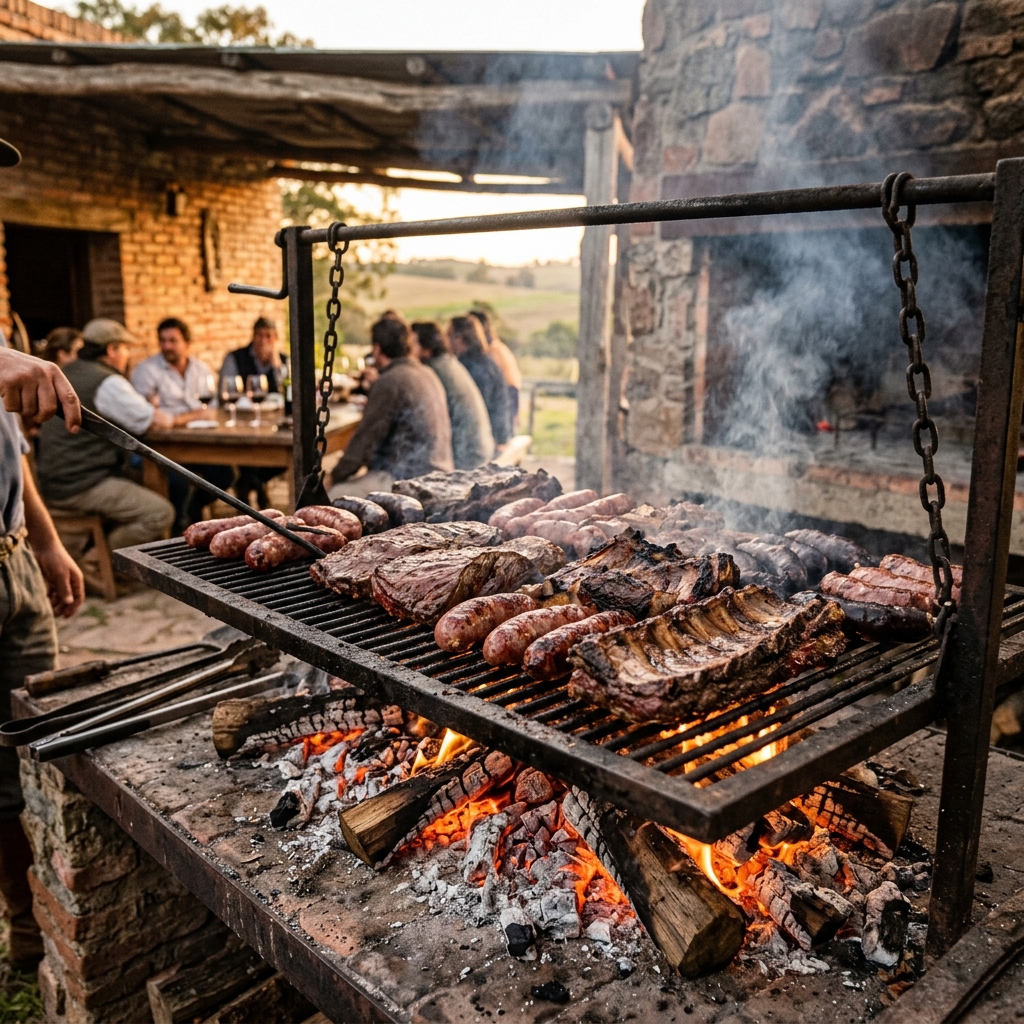
The Art of the Uruguayan Asado: A Ritual of Fire, Tradition, and Community
When a traveler steps into the rolling plains of Uruguay, they are quickly introduced to a scent that defines the national identity: the intoxicating aroma of wood smoke and roasting beef. In many parts of the world, "barbecue" is a casual term for a quick meal cooked over charcoal or gas. But in Uruguay, the Asado is a sacred ritual, a weekly pilgrimage to the parrilla (grill) that binds families, friends, and entire neighborhoods together. To understand the asado is to understand the soul of Uruguay.
The Genesis of the Flame: The Gaucho Legacy
The history of the asado is inextricably linked to the gaucho—the nomadic, rugged horsemen who roamed the vast pampas of the Rio de la Plata. In the 18th and 19th centuries, cattle were so abundant in Uruguay that they often outnumbered people by a factor of ten. For the gaucho, the asado was born of necessity. With only a knife (facón) and a flask of water, they would roast entire sides of beef on a vertical wooden stake (asado con cuero or estaca) over an open fire.
This rustic origin still informs the modern asado. While today we use sophisticated iron grills, the core philosophy remains: respect for the animal, patience with the fire, and the rejection of artificial shortcuts like charcoal or chemical starters. In a true Uruguayan asado, only native hardwoods like Coronilla or Espinillo are used. These woods burn slowly, creating consistent embers (brasas) and imparting a subtle, sweet smoke that enhances rather than masks the flavor of the grass-fed beef.
The Architecture of the Parrilla
At the heart of the ritual is the parrilla. Unlike American smokers or closed grills, the Uruguayan parrilla is an open-air stage. A critical component is the brasero—a side basket or cage made of iron bars where the wood is burned. As the logs consume, they break into glowing red embers that fall through the bars. The asador (the pitmaster) then uses a shovel or rake to distribute these embers under the main grill rack.
The height of the grill is often adjustable. This allows the asador to manage the temperature with surgical precision. A "low and slow" approach is the golden rule. If you can hold your hand over the grill for five to seven seconds without burning, the temperature is perfect for the larger cuts.
The Hierarchy of the Roast: A Multi-Course Symphony
An authentic asado is not a single dish; it is a carefully timed performance that can last four to five hours. The sequence of service is vital to the experience.
Phase 1: The 'Achuras' (The Appetizers)
The ceremony almost always begins with the achuras. These are the variety meats that cook quickly and satisfy the initial hunger of the guests.
- Chorizo & Morcilla: The classic sausages. Uruguayan chorizo is typically made of pork and beef with mild spices, while the morcilla (blood sausage) comes in two varieties: salada (savory) or dulce (sweet, containing raisins and walnuts).
- Mollejas (Sweetbreads): Considered the "caviar of the parrilla," these are grilled until the exterior is glass-like in its crispness while the interior remains buttery and tender, usually finished with a squeeze of fresh lemon.
- Chinchulines & Riñones: Chitterlings and kidneys, often marinated in white wine or lemon to provide a tangy, crispy contrast to the richer cuts.
Phase 2: The Cheese of Choice
No modern asado is complete without Provoleta. A thick slice of provolone cheese is placed directly on the grill (or in a small iron skillet) and cooked until it develops a golden crust on the outside while becoming a molten, stretching pool of flavor on the inside, usually topped with a pinch of oregano and a drizzle of olive oil.
Phase 3: The Main Event
Once the appetizers have been cleared, the stars of the show arrive.
- Tira de Asado: This is the quintessential cut. It is a flank of ribs sliced crosswise into thin strips. The bone-to-meat ratio is perfect, and the fat rendered by the slow heat makes it incredibly flavorful.
- Vacío: The flank steak. This cut is covered in a thin layer of fat that, when cooked slowly, creates a "crackling" effect that protects the tender, juicy meat inside.
- Entraña: Skirt steak, once a neglected cut, is now highly prized for its intense beefy flavor and quick cooking time.
- Pulpa: Large, lean roasts like the tri-tip (colita de cuadril) are often served to ensure everyone gets their fill of the world's best grass-fed beef.
The Secret of the Salt and the Sauce
Purists believe that high-quality beef needs very little help. Before the meat hits the heat, it is seasoned with sal parrillera—a coarse, crystalline salt that dissolves slowly and doesn't "over-salt" the meat. Marinades are rare for the main cuts.
However, the one non-negotiable accompaniment is Chimichurri. This isn't just a sauce; it's a legacy. Every family has their secret recipe, but the foundation is always dried oregano, parsley, garlic, red pepper flakes, oil, and vinegar. It is never blended into a paste; rather, it is a chopped infusion that provides a bright, acidic counterpoint to the richness of the fat and smoke.
'Un Aplauso para el Asador'
The asado is not just about the food; it's about the social fabric. While the asador works the fire, the guests gather around with a glass of Tannat wine or a round of Mate. The conversation flows as freely as the wine, covering everything from politics to the latest soccer scores.
When the final tray of meat is brought to the table and the first bites are taken, a tradition occurs that is unique to the Rio de la Plata. Someone will inevitably shout: "¡Un aplauso para el asador!" (A round of applause for the pitmaster!). The room erupts in clapping, a simple but deep gesture of gratitude for the hours of labor spent over the hot coals.
Conclusion: A Taste of Montevideo in Queens
At La Gran Uruguaya, we don't just "grill meat." We carry the torch of this thousand-year-old tradition. Our parrilla is powered by wood, our cuts are selected from the finest pastures, and our asadores understand that you can't rush perfection.
When you join us for an asado, you aren't just a customer; you are part of the ronda. You are experiencing the same warmth, the same smoke, and the same legendary hospitality that has defined the Uruguayan countryside for generations. So, pull up a chair, raise a glass of Tannat, and get ready for the best meal of your life.